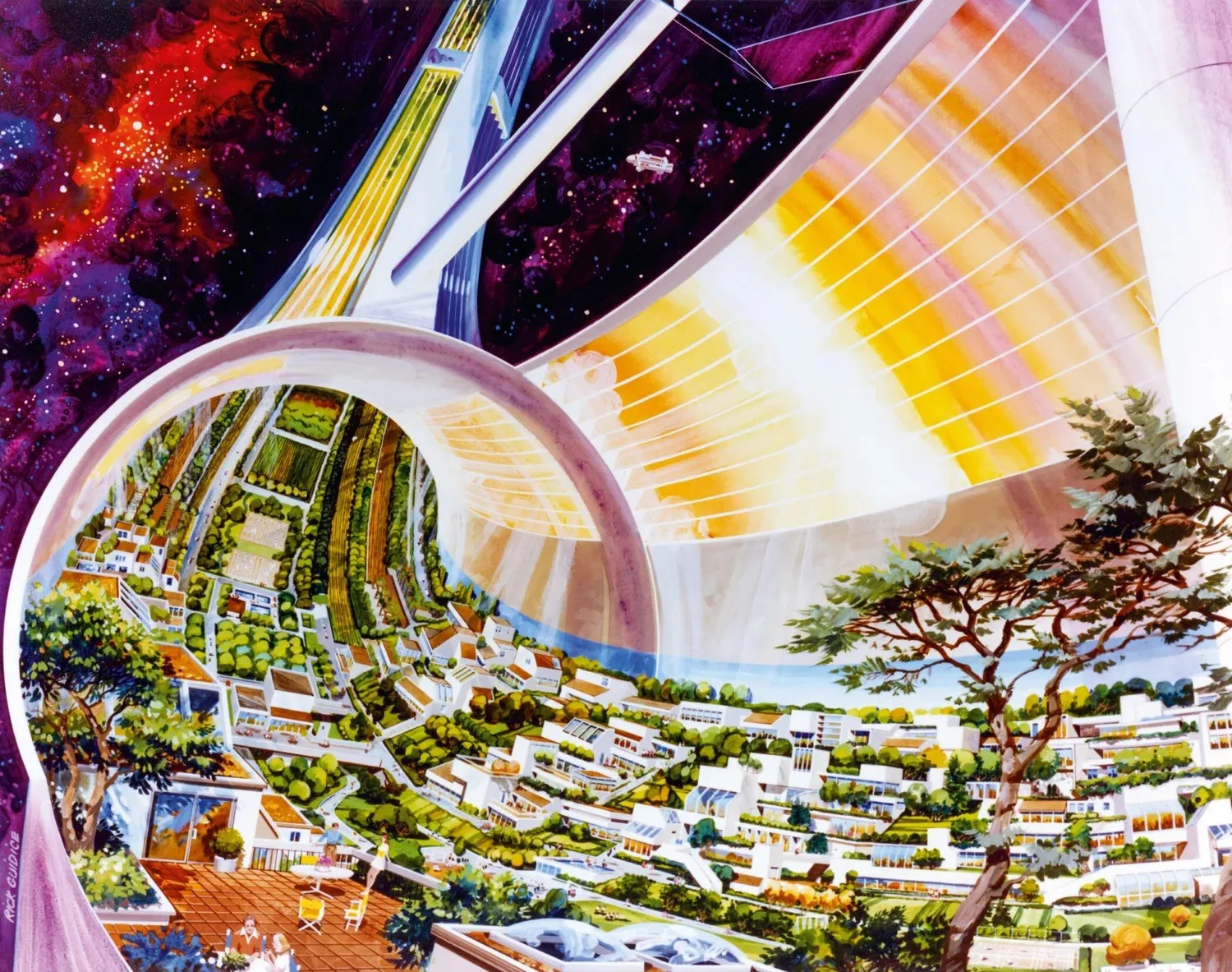
More than 250,000 people toured a computer-controlled house in the Arizona desert over four years in the early 1980s. A Motorola system adjusted the blinds, set the temperature and stored the family recipes. The brochure reassured nervous visitors that people would remain "in complete control."
This was the Ahwatukee House of the Future, a copper-clad pyramid designed by architect Charles Schiffner and completed in 1980. It's often called the first microcomputer-controlled home. His drawing of it, in colored pencil and gold leaf, hangs in the last section of LACMA's Home of the Future, 1925-1985.
Most of the show is about futures that never arrived. This section is about the ones that did, just later than promised and in a different form.
What the future got right
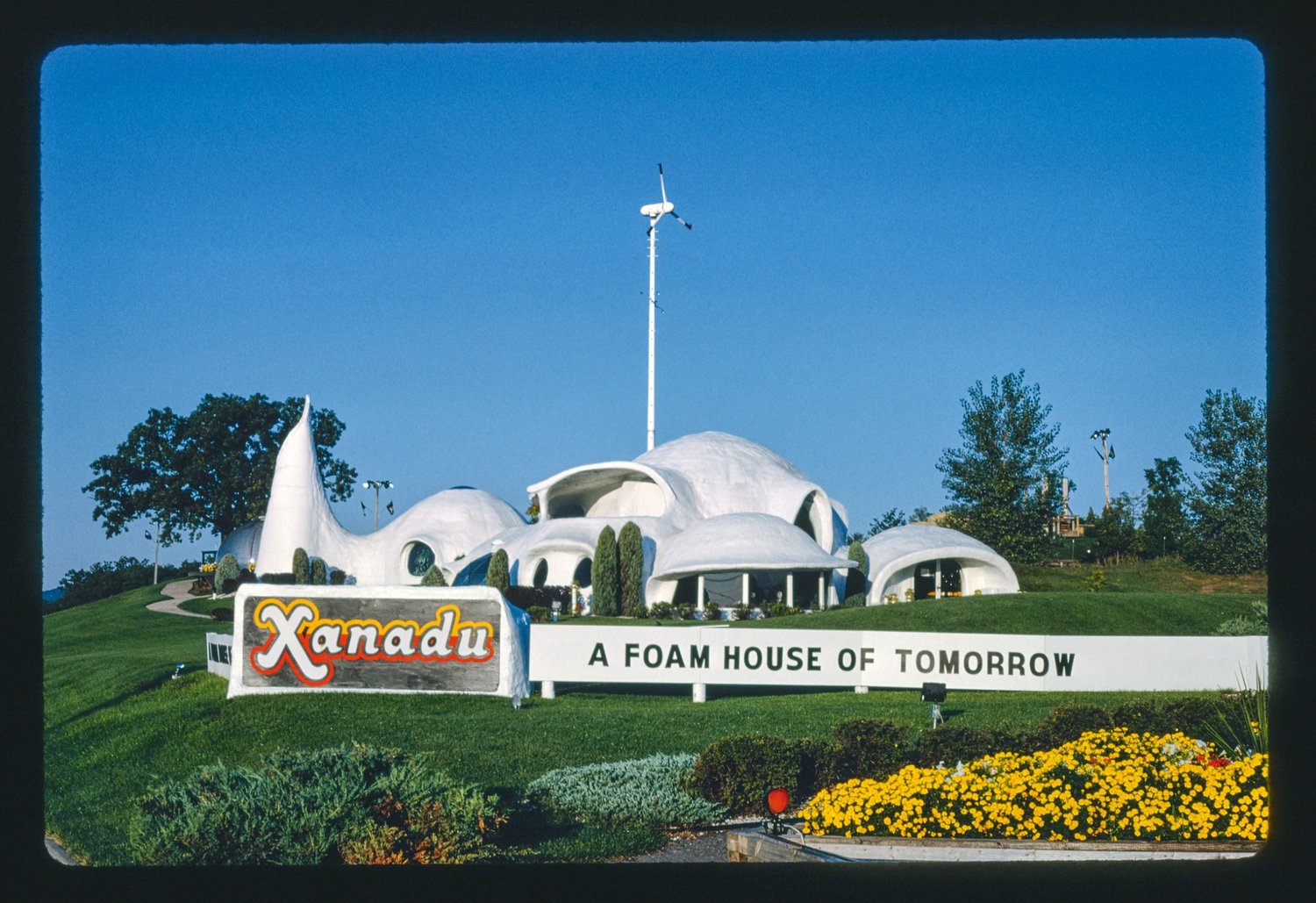
The smart home. Ahwatukee, plus the foam Xanadu houses built along tourist routes in Wisconsin, Florida and Tennessee, sold the idea of a central "home brain" running lighting, climate, security and entertainment. Neither one convinced Americans to wire their homes. The personal computer did. Time skipped its Man of the Year for 1982 and named the computer "Machine of the Year." The original 1984 Macintosh is in the show, along with the Heathkit HERO Jr. robot and, yes, The Clapper.
The video call. At the 1964 New York World's Fair, AT&T put visitors in Picturephone booths so they could see the person on the other end, sometimes as far away as Disneyland. The phone had a privacy switch for voice-only calls, but flipping it seemed rude, so people stayed on camera whether they were ready or not. It failed because it was too expensive and too exposing. It turned out to be sixty years early, not wrong. Your buyers now take three video calls a day from the same room.
The home office. Niels Diffrient's Jefferson Collection chair, designed around 1982, assumed Americans would spend most of their waking hours sitting in front of a screen. It reclined slightly, put the monitor at eye level and held the keyboard over the lap. It retailed for $2,500, which the label puts at nearly $8,500 today. He was right about the screen. He was optimistic about the posture.
For listings, this is why "bonus room" undersells the space. A room with a door, a window, good light behind the camera and enough outlets is the room Diffrient was designing for. Photograph it that way and name it that way.
The pocket radio. The Regency TR-1 arrived in 1954 as the first commercially available transistor radio. It fit in a pocket, and it turned radio from a family activity into a personal one. Dieter Rams's Braun T3, which the label notes is often compared to the iPod, sits nearby. The design language of personal electronics was mostly settled in the 1950s.
The house that works for everyone
My pick for the most important object in the show is a drawing.
In 1972, designer Marc Harrison worked with the International Lead Zinc Research Organization and the Rhode Island School of Design to design a house anyone could use, regardless of age or physical ability. It had door handles that are easy to grip, wider doorways and sinks you can roll a wheelchair under. A colleague said Harrison believed that solving the problem for a disabled person would solve it for everyone. Harrison also designed the 1980 Cuisinart in the same room, which is a good argument that he was right.
This is the part of the future most listings ignore. Single-level living, step-free entries, wide hallways, lever handles and a curbless shower aren't niche features. They're universal design, and plenty of buyers are looking for them. If your listing has them, describe them plainly and specifically. Describe the house, never the buyer: write "step-free entry from the garage," not "perfect for retirees."
And who the future was for
The last section also comes back to the question the whole show asks: who got to live in these futures.
Floyd McKissick's Soul City, a planned multiracial new town in North Carolina in the 1970s, got federal support and started construction, then collapsed under political opposition and the mid-decade recession. The label notes McKissick was cleared of wrongdoing. Sun Ra's 1974 film Space Is the Place and the album covers for Parliament's Mothership Connection and Herbie Hancock's Thrust imagined Black futures beyond a country that had shut Black families out of the suburban dream. Mattel added a Black astronaut, Jeff Long, to its Major Matt Mason line in 1969. The label points out that NASA's astronaut corps would stay entirely white for another fifteen years.

You already work under fair housing law. This show is a reminder of what that law was written to fix. The future was sold widely. It wasn't delivered equally.
What to do with all this
Go see it before March 14. Then look at your current listings and ask the question these curators keep asking: what's actually different about living here, and who could use it? If the honest answer is a good office, a step-free path or a kitchen layout that works, lead with that. That's the part of the future that actually showed up.
The future was never the gadgets. It was always a house that works a little better for whoever lives there.
This is Part 5 of Listed Virtual's series on LACMA's Home of the Future. Part 1 has the visit details.
