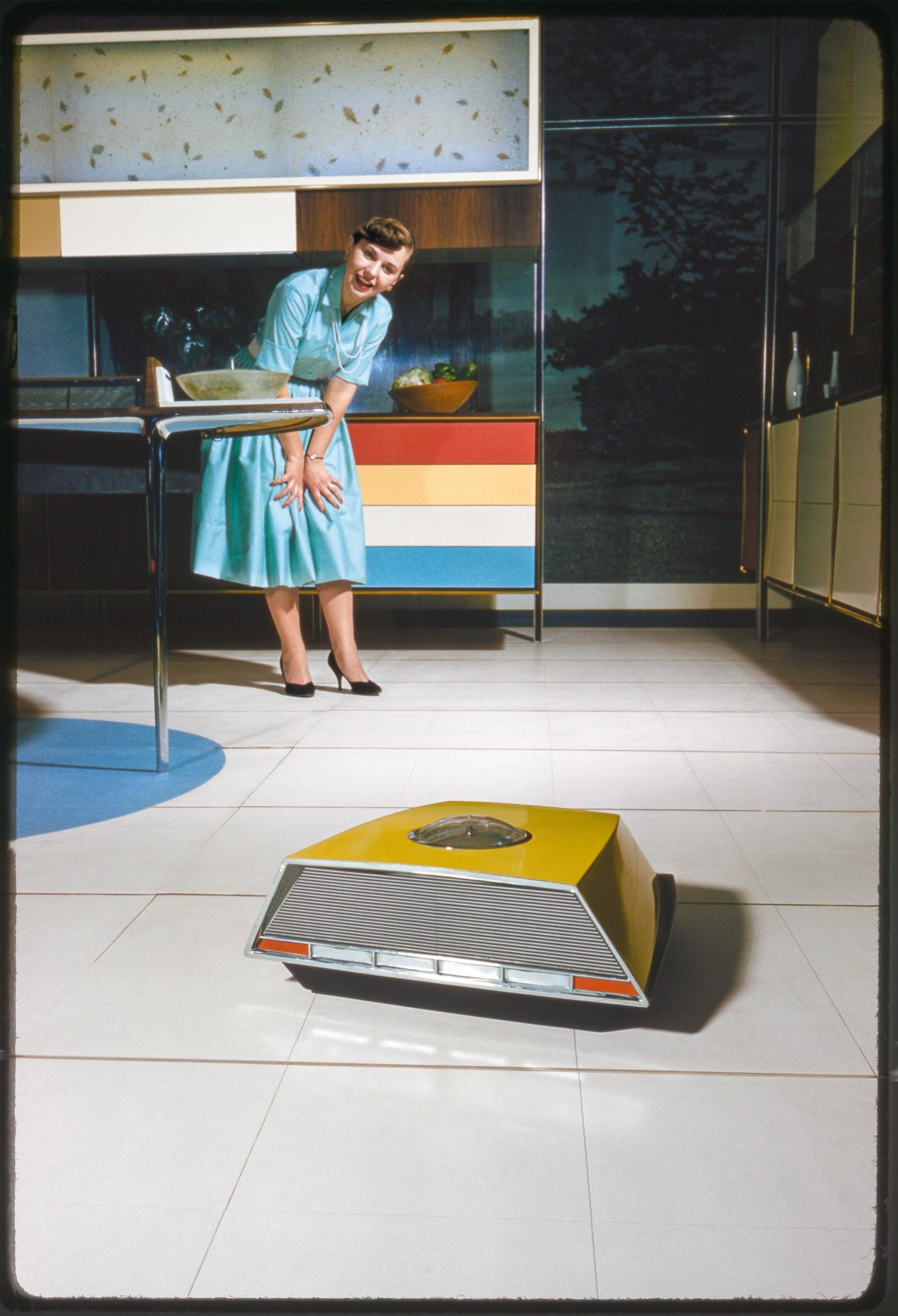
In 1957, Whirlpool's ads promised that its new "electronic oven" could bake a cake in three minutes. LACMA's label notes, very drily, that microwaves are now in most American kitchens and are rarely used for cake.
That's the whole story of the kitchen of tomorrow in a sentence: real technology, a ridiculous promise and an outcome nobody planned.
LACMA's Home of the Future, 1925-1985 has a whole wall called "Kitchens of Tomorrow," a companion show on two famous kitchens and a run of appliances that would make a flipper weep. If you write listing copy, it's the most useful hour you'll spend this month.
The promise, decade by decade
The wall text lays it out: throughout the twentieth century, manufacturers promised that technology would free women from kitchen work. The kitchen of tomorrow was pitched as a scientist's lab with a dishwasher, self-cleaning oven, push-button range and automated serving cart.
The 1930s version came in chrome. The Magic Chef stove was one of the first with a clock built in, so cooking would be timed like an experiment. GE's Monitor Top refrigerator was named for the gun turrets on a Civil War warship. By 1932, GE claimed one in three homes with modern refrigeration had one.
The 1950s version came in color. Formica's Skylark pattern, the boomerang one, was designed in 1951 for train interiors, then recolored by Raymond Loewy's firm for a 1956 line in primrose, aqua and pink. Frigidaire promoted its "Kitchen of Tomorrow." Whirlpool's push-button Miracle Kitchen went all the way to the 1959 American National Exhibition in Moscow.
By 1969 Neiman Marcus was selling the Honeywell H316 Kitchen Computer. It's in the show. The ad line, "If She Can Only Cook as Well as Honeywell Can Compute," tells you who the marketers thought they were talking to.
What actually happened
The wall text spells it out. New appliances raised the standards instead of eliminating the work: more washing, more cleaning, more elaborate meals and higher expectations for cleanliness. Even the most futuristic kitchens assumed women would keep doing the domestic work. Technology changed how the kitchen looked but rarely who did the work in it.
The sharpest object in the section isn't an appliance. It's Barbie's Dream House, 1962, made by Mattel in Hawthorne. Its most radical feature was that it had no kitchen at all. The label pairs it with a fact worth knowing: at the time, millions of women couldn't get a mortgage without a male co-signer, and it took the Equal Credit Opportunity Act of 1974 for the law to start catching up. Barbie had a house of her own first.
The two kitchens next door
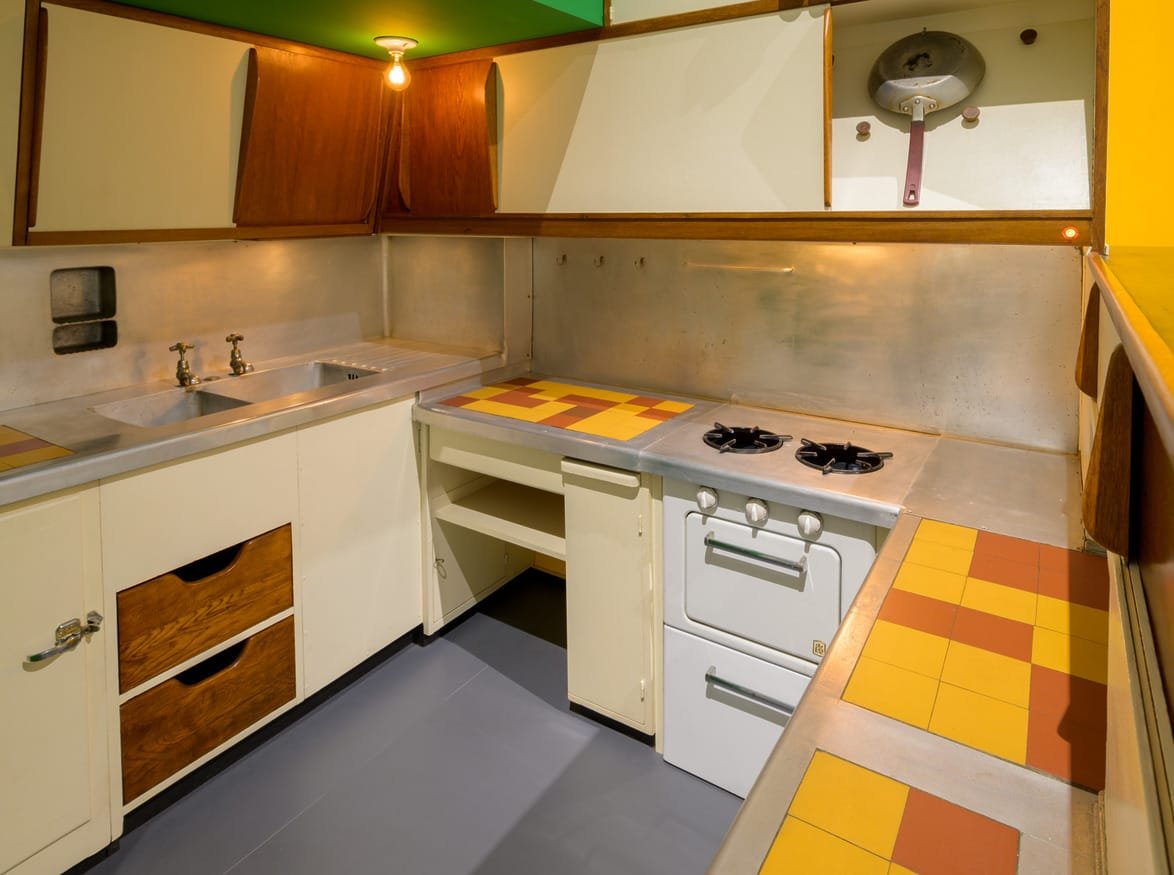
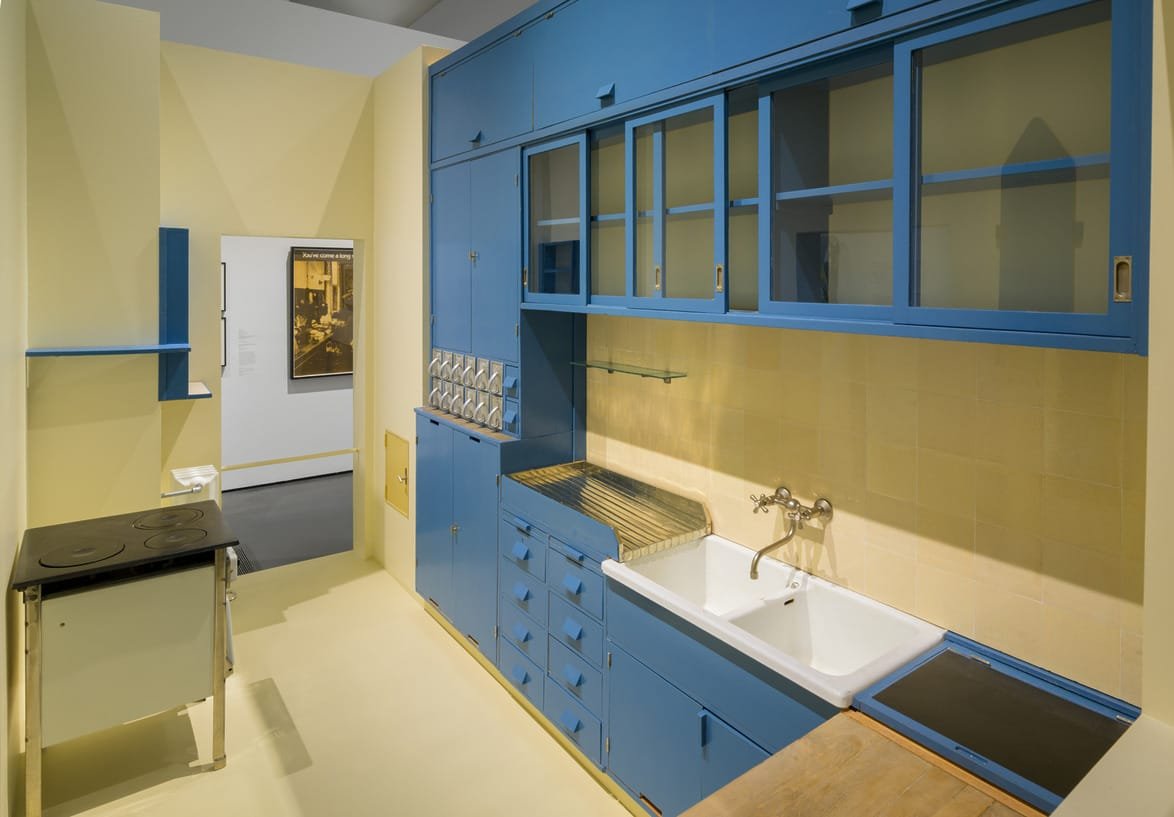
Inside the main show is The Kitchen and Its Discontents, built around two recent LACMA acquisitions. One is Margarete Schütte-Lihotzky's Frankfurt kitchen, designed in 1926-30 for the New Frankfurt social housing program in Germany. It's compact and laid out for efficiency, the great-grandmother of every galley kitchen you've called "efficient" in a listing. The other is Charlotte Perriand's modular kitchen for Le Corbusier's Unité housing blocks.
Both are real rooms, both are in a museum, and both are probably smaller than the kitchen in your last condo listing. Think about that before you write "cozy" as an apology.
Now, about your listing copy
Here's the uncomfortable part. Most kitchen copy in LA is still written like a 1955 Frigidaire brochure. "Gourmet chef's kitchen." "Entertainer's dream." "State-of-the-art appliances." These are the miracle-kitchen promises sixty years later, minus the charm.
A better way, borrowed from the labels, since museum label writers are some of the best copywriters in the city:
Name the thing. LACMA doesn't call a stove "high-end." It says Magic Chef, series 1400, introduced 1935. You should write "48-inch Wolf range, six burners and a griddle," not "professional-grade appliances." Specifics persuade. Adjectives don't.
Say what it does for the person. The Magic Chef label explains the clock: it made cooking precise. Your version: "The island seats five, faces the yard, and has a prep sink, so whoever's cooking isn't facing a wall." That's a reason to buy. "Spacious island" is filler.
Respect the original. If the kitchen is original mid-century, with the Formica, the steel cabinets and the built-in wall oven, don't apologize for it with "bring your contractor." There's a buyer looking for exactly that kitchen, and this show is proof people will line up at a museum to see one. Call it original, date it, and photograph it like it's on loan to LACMA.
Don't promise freedom. Nothing in a kitchen is "effortless." Every generation of buyers learns that. Promise a good layout, good light and good storage, which you can actually deliver.
The kitchen of tomorrow never arrived. Instead we got the island, the microwave and your listing remarks. You can at least fix the remarks.
Next in the series: Part 5, The Smart Home Is Older Than You Are. What LACMA's Home of the Future Got Right.
