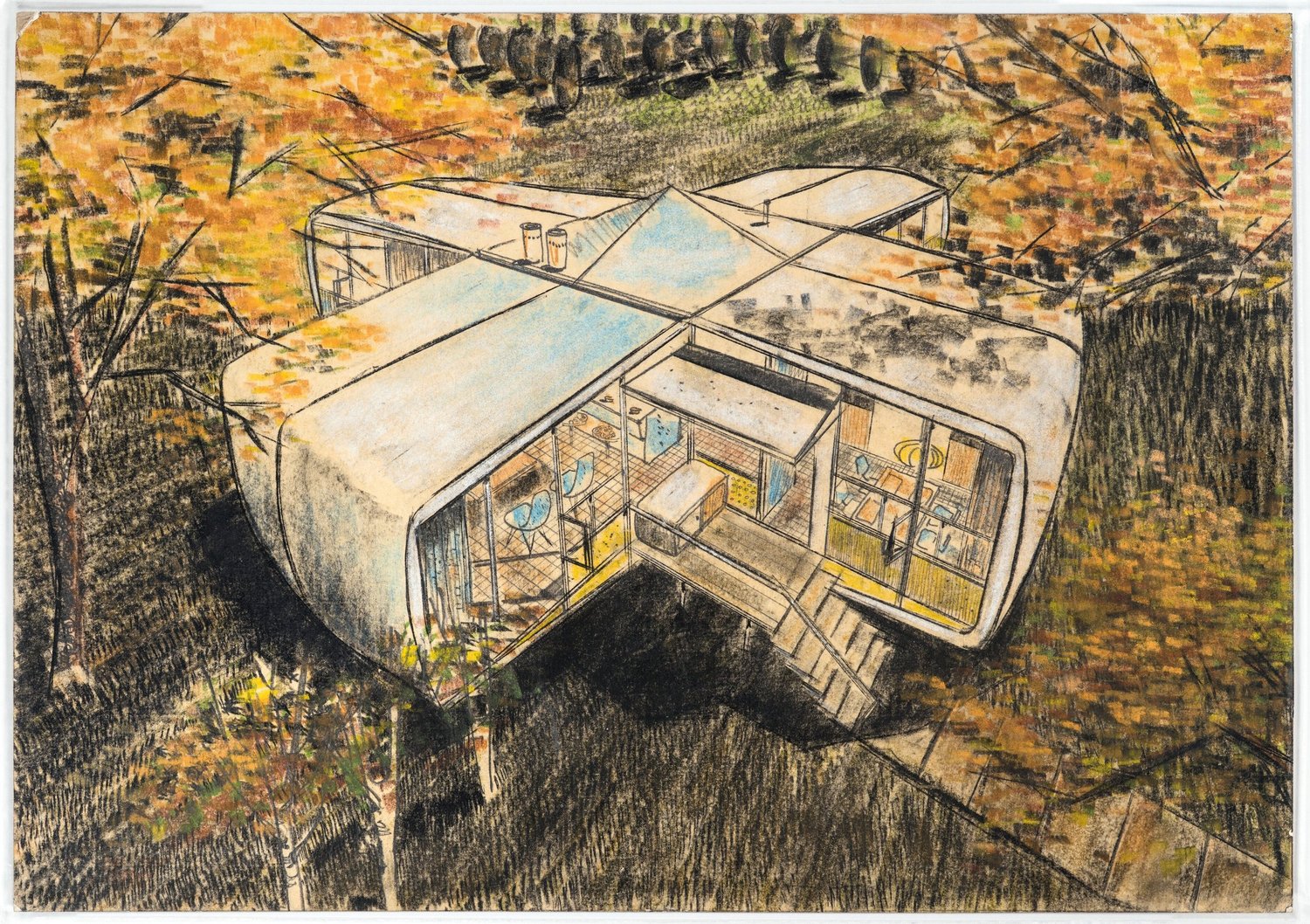
The slogan of Chicago's 1933-34 world's fair was "Science Finds, Industry Applies, Man Conforms."
Put that on a yard sign and see how far you get. Still, the fair figured out something agents have been leaning on ever since. In 1933, for the first time at a world's fair, corporations sponsored full-size model homes to show off their products. The home of the future became a sales strategy, and it never stopped being one.
LACMA's Home of the Future, 1925-1985 is officially a design show. Read the labels like a marketer and it's sixty years of case studies. Here are the six that apply to your next listing.
1. Build the story in steps, and finish with the real thing
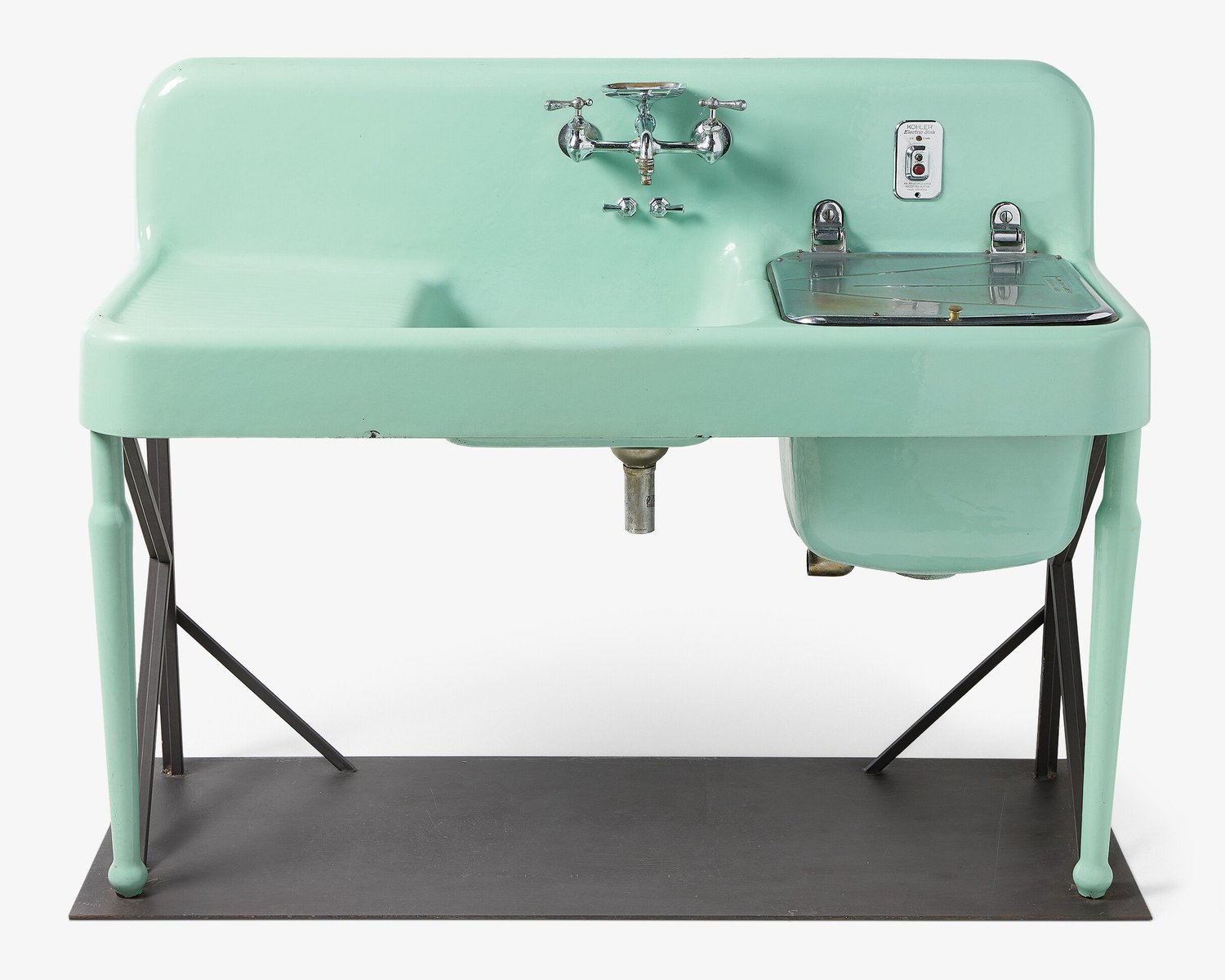
In 1926 Kohler launched its Electric Sink, a dishwasher built into a regular basin and sold as the end of "thrice-daily drudgery." The show displays the whole campaign in a row. First Kohler commissioned an oil painting of an elegant couple admiring the sink. Then they set type on the painting and ran it as a 1927 Good Housekeeping ad. Then the actual sink went on display at the Chicago fair.
The order was emotion, then message, then the product in person. That's your listing launch: lifestyle photography, then the copy, then the open house. Most agents run it backwards and open with the floor plan.
2. Speed and crowds are their own headline
The Aluminaire House went up in ten days for a 1931 New York exposition and drew more than 100,000 visitors in its first week. The Monsanto House of the Future at Disneyland drew some twenty million visitors before it was demolished in 1967. The Ahwatukee House of the Future in Arizona drew more than 250,000 over four years.
None of these houses sold the way a listing sells. They sold an idea, and the crowd was proof the idea was popular. When your open house is packed, photograph the line. Social proof was a selling tool long before anyone called it that.
3. Show the inside of the machine
At the 1939 New York World's Fair, AT&T displayed a transparent telephone (one of only twenty made) next to the regular black one. Visitors could see the wiring, and the idea was to reassure them that the strange new technology was understandable. RCA did the same with a clear Lucite "Phantom" version of its first television, which convinced skeptics the thing was real.
Your version of this is the disclosure package, the inspection summary and the permit history, put up front where buyers can see them. Buyers relax when they can see inside the machine. Hiding the wiring makes them nervous, in 1939 and now.
4. Publish the prices
When MoMA built Gregory Ain's Exhibition House in its sculpture garden in 1950, the catalogue included a price list for every commercial item on display, which no museum had ever done. That's how a prototype stopped feeling like a fantasy and started feeling like something you could buy.
For your listings: the property website should include the renovation scope with dates, the approximate cost of the ADU the lot can hold (sourced, not guessed), and the HOA dues in bold. Specifics turn a fantasy into a plan.
5. When the art isn't landing, show real life
From 1937 to 1941, graphic designer Lester Beall made poster campaigns for the Rural Electrification Administration. His first versions used bold modernist pictograms. Officials worried those wouldn't connect with farmers who didn't trust government programs, so later posters used photographs of electricity actually improving daily life. By 1941, half of American farms had electricity, up from about 10 percent in the mid-1930s.
This is the most honest marketing lesson in the building. Your clever concept piece may impress other agents. Your buyer wants to see the kitchen at 7 a.m. with coffee on the counter.
6. Don't promise more than the house can do
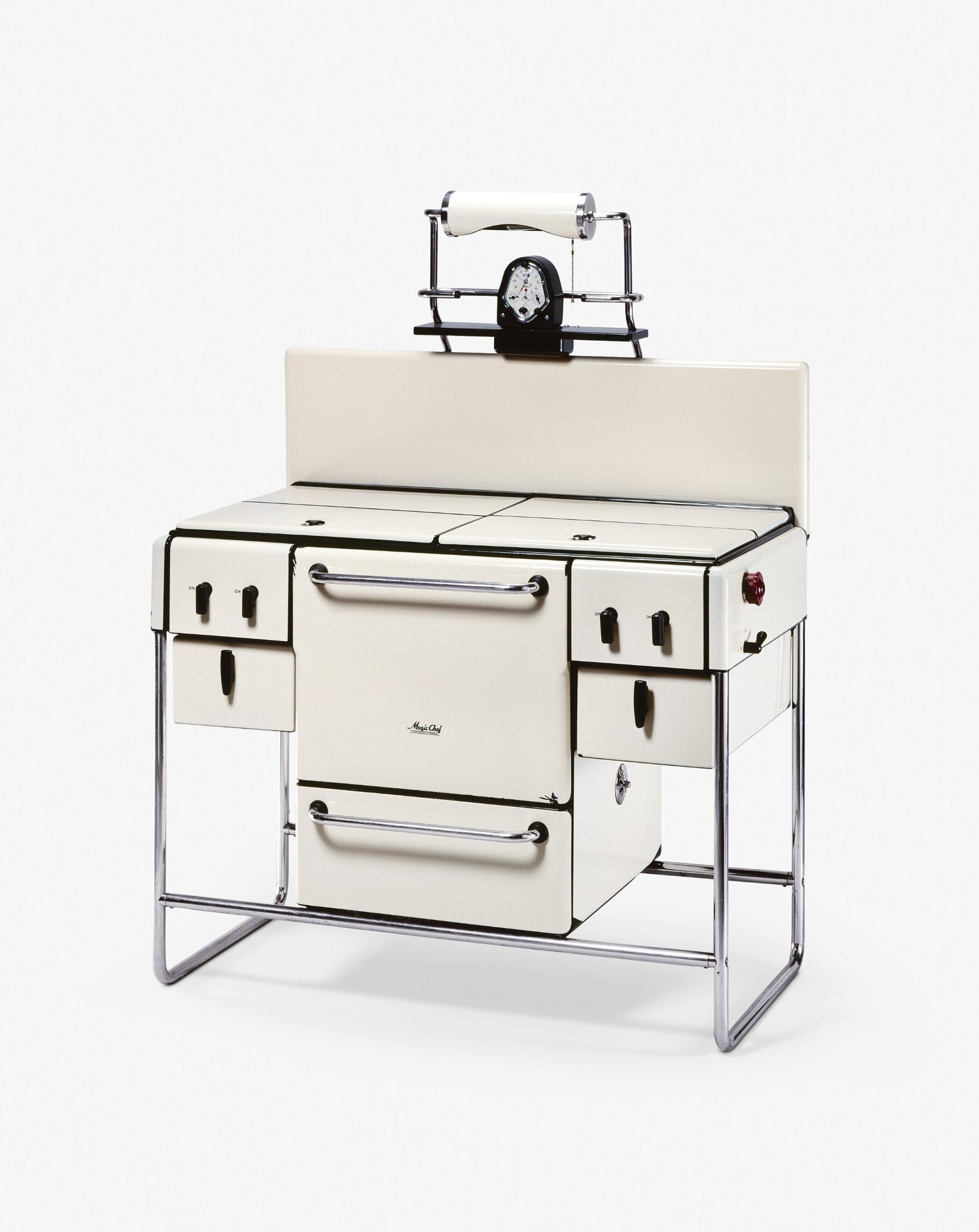
A 1937 Magic Chef ad called its customer "Mrs. Modern" and promised the stove would serve her instead of enslaving her. The wall text points out what happened next: new appliances raised the standards instead of cutting the work. There was more washing, more cleaning and more elaborate meals. The miracle kitchen created a new set of chores.
AT&T's Picturephone failed for a related reason. It made a great demo at the 1964 fair. At home, it turned out to be too expensive and too exposing.
So listing remarks that call a house "turnkey" when the roof dates to 1994 work the same way the Magic Chef ad did. They close the sale and set up the complaint afterward. Promise exactly what the house delivers and then show it.
The quote to keep
Charles Schiffner, the architect behind the Ahwatukee house, is quoted on the wall: "Instead of predicting the future, I called it a showcase of ideas."
That's a better description of a great listing than "dream home" will ever be. A house that shows people how they could live will outsell a house that only shows them square footage.
I run a marketing agency, so naturally I think every listing deserves a world's fair. Most just need someone to stop calling the kitchen "gourmet."
Next in the series: Part 4, The Kitchen of Tomorrow Never Arrived. Your Listing Copy Is Still Pretending It Did.
